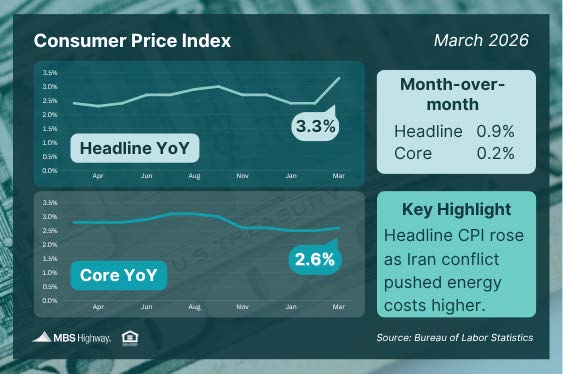
The latest inflation data from the Consumer Price Index (CPI) showed prices picked up in March, rising 0.9% for the month and3.3% year over year, up sharply from 2.4% previously. The increase was largely driven by higher fuel and gasoline prices tied to the Iran conflict.
Core inflation, which excludes food and energy, remained more moderate, rising 0.2% for the month and edging up to 2.6% annually.
We also received February’s Personal Consumption Expenditures (PCE) index, the Federal Reserve’s preferred inflation measure, which had been delayed due to last fall’s government shutdown. The report showed broad-based price increases, a bit surprising given it reflects data from before the March oil spike.
What’s the bottom line?
The Fed is balancing two competing trends: inflation that’s still above target and signs the labor market may be slowing. Sticky inflation supports a cautious approach to rate cuts, while softer employment data could strengthen the case for easing later this year.
The Fed has held its benchmark rate steady so far this year after cutting three times late last year. While that rate doesn’t directly set mortgage rates, it does influence overall borrowing costs.
March meeting minutes showed that more officials (though still a minority) are open to the possibility of rate hikes if inflation remains elevated, compared to the January meeting. This reflects ongoing concerns about geopolitical tensions and rising energy prices. Overall, the Fed remains in a wait-and-see mode, closely monitoring how inflation and the economy evolve.